
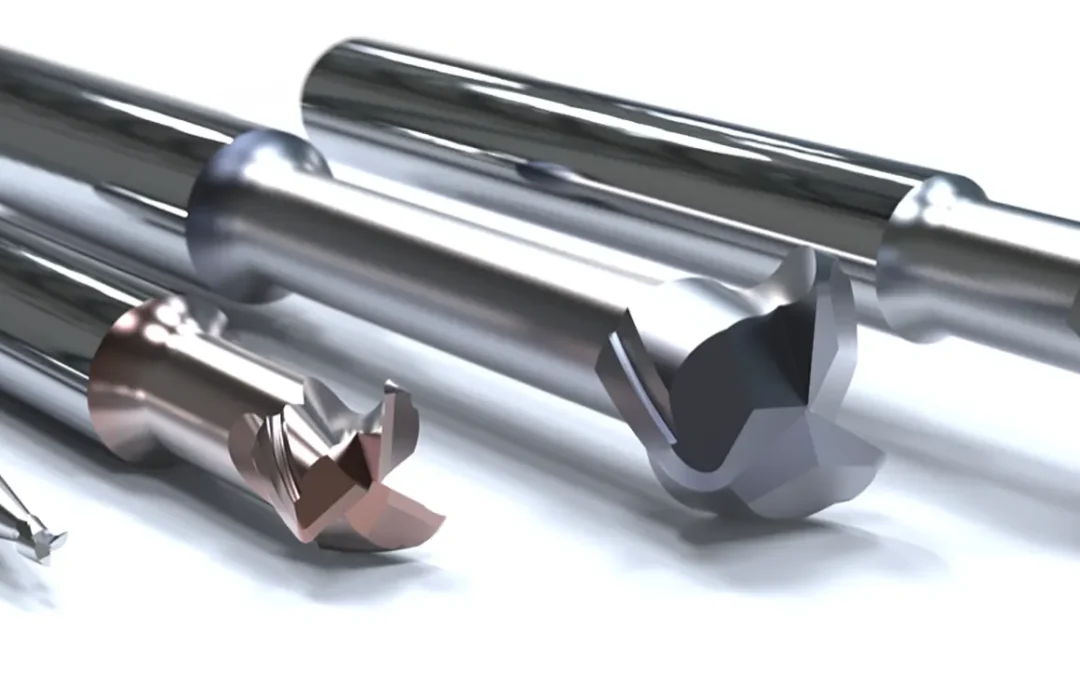
CNC precision undercut milling has become a defining capability in the aerospace manufacturing sector, particularly for creating multi-geometry turbine retention pockets that demand extreme accuracy, stable cutting conditions, and flawless dimensional repeatability. These pockets—often located in some of the most structurally and thermally stressed regions of turbine disks and blades—require a machining strategy capable of navigating compound angles, concealed surfaces, and undercut geometries that conventional end mills cannot access directly. As turbine designs become more advanced and jet engine performance pushes toward higher pressure ratios, hotter operating temperatures, and tighter structural tolerances, manufacturers must rely on highly specialized toolpaths, multi-axis machine kinematics, and advanced tool geometries to produce these complex retention features reliably. CNC precision undercut milling bridges the gap between conventional profiling and innovative cavity creation by allowing toolpaths to reach hidden surfaces without compromising structural integrity. With the use of form cutters, lollipop mills, tapered undercut tools, and 5-axis synchronization, aerospace production teams can achieve micron-level conformity across every internal pocket contour. This elevated precision is critical not only for retention stability but also for ensuring that load transfer, thermal expansion behavior, and assembly alignment remain consistent throughout the operational life of the turbine component. As modern turbines continue to evolve into more compact and aerodynamically refined systems, advanced undercut milling becomes indispensable in achieving the necessary level of complexity and performance.
The difficulty of machining multi-geometry turbine retention pockets lies in the combination of geometry variation, depth challenges, and mechanical loading distribution. These pockets typically consist of blended walls, variable cross-sections, angled surfaces, radius transitions, and undercut shoulders designed to interlock with blade roots or secure load-bearing hardware. Executing precision undercut milling in these conditions requires cutting strategies that maintain stable tool engagement across a constantly shifting geometry, all while managing tool access constraints inherent to deep-pocket designs. A standard end mill cannot generate such undercut features because the cutting edges cannot wrap around or access reversed angles within the cavity. Instead, advanced 5-axis toolpaths with synchronized tilt control allow the tool to enter from carefully calculated vectors, enabling the cutting edges to reach and finish previously inaccessible surfaces. CNC undercut milling also demands exceptional collision avoidance planning, since even slight toolholder interference can mar the component or cause catastrophic machine faults. Modern CAM platforms address these challenges through continuous simulation, dynamic tool tilting, optimized cutting engagement angles, and refined step-over calculations tailored to curved pocket surfaces. The result is a combination of stability and accuracy that allows manufacturers to produce turbine retention pockets with uniform surface finish, consistent wall thickness, and perfectly matched geometry across multiple pockets, even when working with difficult-to-machine materials like nickel superalloys or titanium-based composites.
Precision undercut milling significantly enhances the mechanical performance of turbine retention pockets because smooth internal transitions and precise engagement surfaces reduce stress concentrations, prevent micro-cracking, and ensure proper load distribution during high-RPM operation. Turbine disks and blades must endure extreme mechanical forces, including centrifugal loads, thermal gradients, vibration harmonics, and cyclic fatigue, making even subtle geometric imperfections potentially catastrophic. When undercut milling produces surfaces that deviate from engineered specifications, the resulting stress risers may propagate into full structural failures over time. This is why advanced CNC milling strategies integrate curvature-matched cutting angles, toolpath smoothing algorithms, and adaptive feed control to ensure that internal transitions remain seamless. Undercut pocket geometry directly influences blade retention stability; for example, a poorly machined undercut shoulder may weaken the locking mechanism or compromise the disk’s ability to maintain tight clearances during thermal expansion. By applying precision undercut milling, aerospace manufacturers can maintain uniform engagement surfaces that minimize frictional wear, reduce fretting at the interface, and promote secure, vibration-resistant component retention. Furthermore, the precision achieved in these pockets contributes to a more predictable and efficient airflow through the turbine’s core, promoting better thermodynamic performance and fuel efficiency.
From a tooling and process-engineering perspective, CNC undercut milling for multi-geometry turbine retention pockets requires advanced tool material science, optimized geometries, and specialized coatings capable of withstanding intense heat and abrasive conditions. Aerospace materials such as Inconel 718, Rene alloys, and titanium resist deformation but generate excessive heat during cutting, increasing the risk of tool wear or chipping. Undercut milling tools are typically longer and more slender than conventional tools, making them more susceptible to deflection and vibration if not carefully controlled. To counter these challenges, manufacturers utilize ultra-rigid toolholders, anti-vibration extensions, variable helix geometries, and adaptive feed adjustments based on real-time load sensing. Toolpath algorithms evaluate curvature complexity and adjust step-down, step-over, and feed rates accordingly to maintain stable engagement at all times. Coatings such as TiAlN, AlTiN, and diamond-like carbon reduce friction and improve thermal resistance, allowing the tool to retain sharpness for longer cycles. Coolant strategies also play a key role; high-pressure coolant delivery helps evacuate chips from deep undercut pockets where chip recirculation can quickly degrade surface finish. When combined with real-time machine monitoring, these optimized tool and process strategies ensure consistent accuracy across long production runs, reducing scrap rates and improving overall manufacturing reliability.
CNC precision undercut milling also fits seamlessly into modern digital manufacturing workflows, enabling greater traceability, consistency, and automated quality control for turbine retention pocket production. Digital twins and simulation-driven machining allow engineers to evaluate every possible cutting orientation, collision scenario, and thermal interaction before the tool ever touches the workpiece. Automated probing systems, in-process metrology, and surface scanning technologies integrate directly into machining centers to verify pocket geometry, undercut depth, radius conformity, and surface quality without interrupting production cycles. Artificial intelligence further enhances process stability by analyzing historical cutting data to predict tool wear, identify optimal tool tilt patterns, and prevent geometry drift during long production runs. This digital integration ensures that every turbine retention pocket—regardless of complexity or depth—meets the rigorous aerospace certification standards for dimensional precision, fatigue safety, and structural uniformity. As aerospace companies shift toward more automated, high-volume turbine production, this seamless digital integration ensures that precision undercut milling remains scalable across global manufacturing lines while preserving accuracy and performance. Overall, CNC precision undercut milling represents a core machining technology that enables the engineering complexity and mechanical reliability expected in next-generation turbine systems.
Through its combination of advanced geometry accessibility, extreme machining precision, adaptive process control, and integration with digital manufacturing ecosystems, CNC precision undercut milling stands as a cornerstone capability for producing multi-geometry turbine retention pockets. These pockets hold critical structural and aerodynamic significance within the turbine assembly, influencing blade stability, load distribution, component lifespan, and operational performance. The ability to machine intricate undercut features with perfect consistency allows aerospace manufacturers to meet increasingly stringent engineering requirements while maintaining production efficiency. As jet engines continue evolving toward higher power densities, reduced fuel consumption, and increased durability, multi-geometry retention pockets will only grow more complex, and the need for precise undercut milling will become even more essential. With its deep engineering value, robust quality outcomes, and forward-compatible digital integration, CNC precision undercut milling will remain a foundational technology that shapes the future of turbine manufacturing and aerospace machining excellence.