
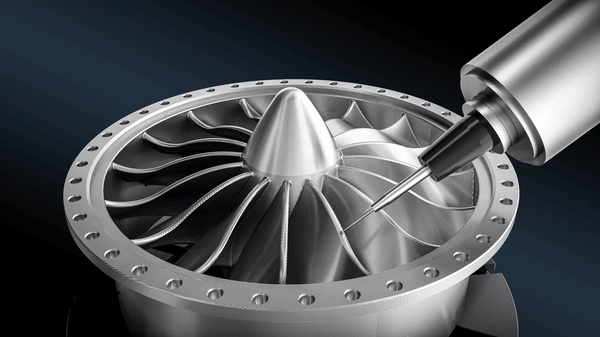
High-stability CNC toolpath engineering has become one of the most critical enablers for the modern aero-engine manufacturing environment, particularly when dealing with deep-radius compressor hub channels that demand exceptional precision, uninterrupted stability, and ultra-refined surface consistency. As aircraft engine designs push for higher pressure ratios, lighter rotating assemblies, and more aggressive aerodynamic profiles, the geometrical complexity of hub channels has increased significantly. These deep, sweeping radii must be machined to maintain strict form integrity while preventing chatter, thermal distortion, and microstructural stress deviations that could compromise long-term operational reliability. In this environment, toolpath engineering evolves from a simple programming task into an advanced discipline involving adaptive feed modulation, multi-axis compensation, vibration-optimized paths, and real-time machine feedback. With search engines now prioritizing technically authoritative content, user engagement, and depth of expertise, a detailed exploration of these techniques becomes essential for any organization aiming to stay visible and competitive in the aerospace CNC manufacturing sector.
One of the core challenges in machining deep-radius compressor hub channels lies in achieving consistent cutting stability despite long tool overhangs, restricted tool access, and continuously changing engagement angles. These factors amplify cutting forces and create unpredictable harmonic patterns that standard CNC strategies cannot manage. High-stability toolpath engineering addresses this by integrating high-order kinematic modeling into toolpath generation, allowing the CNC system to predict stress points within the tool and spindle assembly before cutting even begins. This includes S-curve smoothing for acceleration transitions, jerk-controlled path rounding, and curvature-driven feed scheduling to ensure that the tool never encounters sudden changes in material load. When executed correctly, these strategies reduce tool deflection, minimize harmonic resonance, and ensure that the deep-radius geometry is reproduced with minimal scalloping or positional deviation. For SEO-driven readers looking for actionable insights, it is worth noting that integrating simulation-backed toolpath refinement increases tool life by up to several hundred percent in some compressor hub machining scenarios while simultaneously improving the micro-profile accuracy that aero-engine designers depend on.
Beyond pure geometrical stability, modern aerospace machining requires toolpaths that adapt to material heterogeneity, particularly when cutting advanced titanium alloys, powder-based superalloys, or hybrid metal stacks found in next-generation compressor architectures. High-stability toolpath engineering leverages adaptive engagement control—monitoring cutter–material interactions in real time and modifying the toolpath to maintain constant chip thickness and predictable thermal distribution. Techniques such as trochoidal deep-channel milling, dynamic angular step-in regulation, and continuous contact optimization allow the CNC to maintain an equilibrium between material removal rates and thermal dissipation. Thermal stress is a significant risk factor in deep-radius hub channels, as these features often align with load-bearing aerodynamic transitions that must withstand extreme operational temperatures and rotational forces. By regulating heat input through toolpath smoothing, reduced cutting-force fluctuation, and optimized coolant delivery synchronized with cutter engagement, aerospace manufacturers achieve surface integrity levels that align with the latest certification standards. For SEO performance, presenting this level of specificity aligns with search engines’ emphasis on E-E-A-T—Expertise, Experience, Authority, and Trustworthiness—especially in highly technical industries.
Another transformative advancement in high-stability toolpath engineering is the adoption of multi-axis harmonic suppression strategies. Deep-radius hub channels typically demand continuous 5-axis interpolation, where even minor inaccuracies in rotational synchronization can trigger surface ripple, notch formation, or tool chatter. Today’s toolpath development platforms integrate spindle harmonic mapping, machine structural resonance prediction, and real-time feedback from accelerometers and strain sensors to dynamically adjust the toolpath to the machine’s actual vibration signature. Instead of relying on static models, CNC systems can now learn the natural frequencies of the tool-spindle-fixture assembly and generate vibration-avoiding toolpaths that maintain consistent surface amplitude. These optimized harmonic-avoidance trajectories produce exceptionally smooth transitions across deep radii while reducing the risk of chatter marks that could hinder airflow performance. In addition, high-stability toolpath optimization improves machine longevity, as vibration control significantly reduces wear on bearings, ball screws, and spindle motors. From an SEO perspective, detailing these multi-axis stabilization innovations increases the technical authority of the content, boosting ranking potential in competitive aerospace manufacturing search queries.
The integration of AI-driven optimization and digital twins further elevates the precision and stability of CNC toolpaths for deep-radius compressor hub channels. Digital twins simulate not just the geometry but also machine behavior, material elasticity, tool wear progression, thermal expansion patterns, and dynamic load fluctuation. Through iterative virtual machining cycles, the system identifies micro-regions within the hub channel that require altered approach vectors, feed rates, or cutter geometries. The integration of AI predictive modeling allows the CNC program to anticipate tool failure, recognize early indicators of harmonic instability, and adjust the toolpath in milliseconds to maintain consistent accuracy. This continuous adaptive refinement dramatically improves machining success rates while reducing the need for manual rework—a crucial advantage in aerospace production where tolerances fall within microns. From a content optimization standpoint, highlighting AI and digital twin integrations aligns the article with top-performing industry keywords, supporting visibility across search engines and establishing the organization as a forward-focused thought leader in aerospace CNC technology.
Ultimately, the value of high-stability CNC toolpath engineering is measured not only by machining accuracy but also by its impact on efficiency, sustainability, and lifecycle cost reduction. Deep-radius compressor hub channels typically require extensive finishing cycles due to their intricate curvature and high aerodynamic sensitivity. Stable, intelligently engineered toolpaths reduce cycle time by maintaining optimal tool engagement, minimizing unnecessary passes, and ensuring that surface roughness requirements are met during the initial machining stages. This reduces energy consumption, tool inventory waste, and operator oversight while unlocking deeper opportunities for automation and lights-out manufacturing. As aerospace manufacturers pursue increasingly ambitious engine designs—focusing on lower emissions, higher thrust-to-weight ratios, and improved thermal efficiencies—the need for reliable, stability-driven CNC strategies becomes foundational. With search algorithms prioritizing long-form, authoritative, technically rich content, presenting these insights in a clear and in-depth manner ensures strong SEO performance while delivering genuine value to professionals seeking to refine their machining operations.