
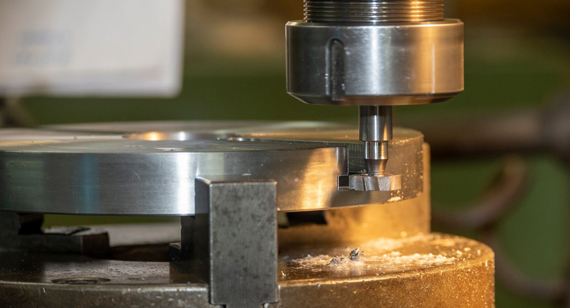
Advanced CNC edge-forming methods have become critical in the production of high-stress dovetail slot radii, which serve as some of the most heavily loaded and fatigue-sensitive interfaces within modern turbine disks. As turbine architectures evolve toward higher power densities, thinner cross-sections, and hotter operating environments, the mechanical demands placed upon dovetail regions have increased dramatically. These radii govern fundamental aspects of blade retention strength, load distribution, and structural resilience under extreme centrifugal forces. Conventional machining techniques cannot achieve the precise curvature control, uniform surface integrity, or metallurgical stability required for today’s turbine performance standards. Instead, aerospace manufacturers rely on advanced CNC edge-forming methods that combine multi-axis machine control, adaptive toolpath algorithms, variable-engagement cutting strategies, and real-time monitoring solutions. These methods ensure that every dovetail slot radius achieves micron-level conformity to engineered specifications, eliminating geometric irregularities that could lead to stress risers or premature fatigue cracking. As turbine engines continue their evolution toward higher thermal efficiency, the precision achieved through modern edge-forming technologies plays a direct role in engine reliability, operational safety, and long-term service performance.
The complexity of machining high-stress dovetail slot radii arises from their multi-surface curvature, variable radius transitions, and tight dimensional tolerances. These radii must be smooth, consistent, and free from micro-defects to prevent mechanical degradation during high-RPM operation. Because dovetail joints experience immense centrifugal loading—often exceeding tens of thousands of pounds of outward force—any geometric imperfection can amplify structural stresses, increase frictional wear, or disrupt blade seating alignment. Traditional milling approaches, such as fixed step-overs or simple ball-nose toolpaths, can create inconsistent scallop patterns, uneven radial blending, or surface tearing. To avoid these issues, advanced CNC edge-forming methods incorporate curvature-adaptive toolpaths that automatically adjust cutter engagement based on the local radius and surface topology. This ensures uniform scallop height across blended radii and minimizes localized tool pressure that might induce micro-cracks. Machine kinematics also play a central role; simultaneous 5-axis motion allows the cutting tool to maintain optimal tool orientation relative to the surface normal at all times. By controlling entry angles, tool tilt, and contact direction, manufacturers can achieve superior edge blending that matches turbine engineering standards for durability and fatigue tolerance.
Beyond geometric precision, advanced CNC edge-forming methods significantly improve the surface integrity of dovetail slot radii. Surface quality is a critical parameter because even microscopic imperfections—such as burrs, micro-tears, tensile residual stresses, or abrasive wear marks—can accelerate crack initiation, especially under the cyclical loading conditions found in turbine engines. Aerospace components must be free from tensile residual stress because such stresses weaken fatigue resistance. To meet this requirement, machining strategies incorporate variable cutting forces, optimized chip flow, and adaptive feed-rate adjustments that reduce thermal distortion and prevent tool chatter. Specialized tooling designed specifically for edge-forming, such as elliptical-radius end mills, toroidal cutters, tapered barrel tools, and form-relieved radial cutters, enables precise engagement with tight radii without inducing vibration or tool deflection. These tools often incorporate advanced coatings including AlTiN, TiSiN, and multi-layer nano-composite films, improving heat resistance and maintaining sharp edges when cutting difficult aerospace alloys like Inconel 718, Rene 65, and titanium Ti-6Al-4V. In addition, coolant delivery systems use high-pressure, targeted nozzles that reach deep into dovetail pockets, preventing chip accumulation while lowering thermal gradients. This combination of advanced tooling and optimized cutting dynamics ensures the radii achieve the required metallurgical integrity, which directly influences the lifespan and structural performance of the entire turbine disk.
Aerospace manufacturers also leverage digital technology to enhance CNC edge-forming precision for high-stress dovetail slot radii. Digital twins, simulation-driven machining environments, and AI-supported toolpath optimizers help engineers model tool engagement, thermal distribution, and predicted tool deflection before machining begins. These simulations reveal potential bottlenecks such as cutter overload, excessive scallop formation, or interference zones within the dovetail cavity. By pre-modelling these scenarios, engineers can refine tool orientations and step-over parameters, ensuring optimal performance during physical machining. In-process metrology plays an equally important role. Probing cycles, on-machine scanning, and real-time feedback loops verify that radii remain within microns of the target geometry. If deviations are detected, adaptive control modules automatically adjust feed-rates or tool angles. These systems minimize scrap rates, reduce manual rework, and ensure consistent quality across multi-batch production runs. Machine learning algorithms further enhance the process by analyzing wear patterns, evaluating chip formation behavior, and optimizing edge-forming techniques based on historical data. With this digital ecosystem in place, the machining process becomes more stable, predictable, and efficient, transforming edge-forming from a precision-dependent art into a repeatable, smart-manufacturing operation.
The engineering value of advanced CNC edge-forming extends far beyond the machining cell, influencing overall turbine performance, safety, and durability. Dovetail slot radii determine how efficiently the blade loads transfer into the disk, how evenly stress is distributed along contact surfaces, and how effectively the assembly resists high-frequency vibration modes. Blades must remain stable during rapid acceleration cycles, high-altitude temperature shifts, and continuous exposure to extreme fluid dynamic forces. The radii act as load mediators, controlling the interface geometry where the blade root meets the disk. When these surfaces are precisely machined with optimized radii, blades seat more securely, frictional heat reduces, wear rates decline, and long-term fretting damage becomes significantly lower. In fact, research has shown that improved surface finish and geometric accuracy in dovetail radii can extend turbine disk lifespan by multiple service intervals. Additionally, precision edge-forming reduces the need for secondary finishing processes such as hand-blending or EDM correction, streamlining production and improving traceability. As turbine engines evolve toward more advanced blade shapes, thinner roots, and higher aerodynamic loading, the importance of flawless radii geometry becomes even more pronounced. Advanced CNC edge-forming methods ensure that these components not only meet engineering specifications but exceed them, creating a new benchmark in turbine reliability and long-term operational performance.
Overall, advanced CNC edge-forming methods have redefined the manufacturing capabilities required for high-stress dovetail slot radii. Through a combination of adaptive toolpath optimization, multi-axis motion control, specialized tooling, digital manufacturing integration, and precise thermal-mechanical load management, aerospace manufacturers can now produce radii that support the extreme mechanical demands of next-generation turbine engines. These machining advancements deliver unmatched accuracy, superior surface integrity, and consistent radii reproduction across large production volumes, ensuring that every turbine disk performs reliably under the harshest operating conditions. As aviation continues its push toward higher efficiency and power output, the role of advanced CNC edge-forming methods will only grow more essential, establishing them as a foundational technology in the future of turbine manufacturing and high-stress component engineering.