
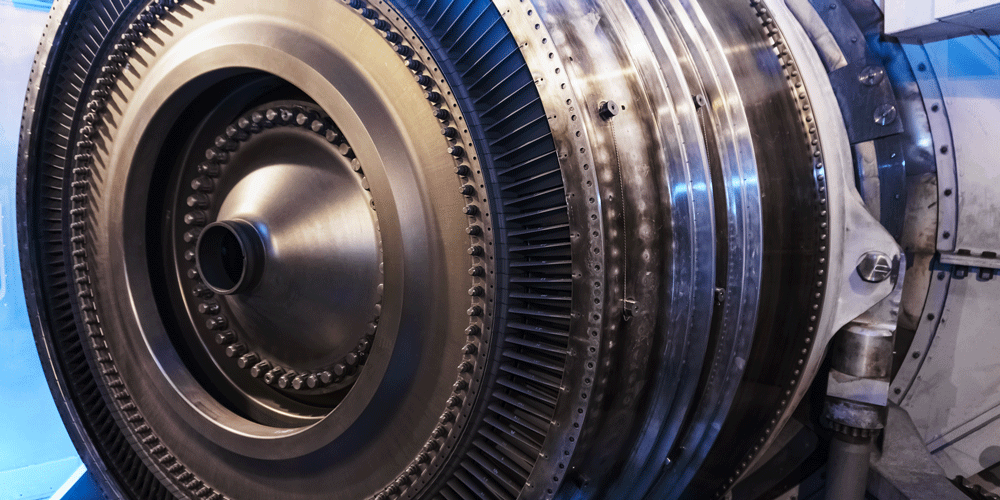
As aero-engine manufacturers push toward higher thrust-to-weight ratios, improved fuel efficiency, and longer component lifecycles, the machining of thick-section disk cavities has become a central requirement in modern aerospace production. These cavities—often found in compressor disks, turbine disks, and integrally bladed rotors—must be shaped with extreme accuracy despite involving deep material removal within superalloys known for their resistance to heat and deformation. Traditional roughing methods struggle to maintain predictable thermal behavior when cutting through thick sections, leading to uneven material removal, stress accumulation, tool degradation, and dimensional instability. Thermal-controlled CNC roughing processes address these challenges by regulating heat generation, dissipation, and transfer during cutting, ensuring stability across all machining phases. These processes incorporate thermal-aware toolpaths, adaptive feed modulation, intelligent coolant delivery, and predictive heat-mapping algorithms that guide the machine in real-time, allowing engineers to rough deep cavities without risking thermal distortion or inconsistent surface conditions. For aero-engine disks where every micron affects stress distribution and rotational integrity, the adoption of thermally stabilized roughing techniques has become essential for achieving next-generation performance standards.
One of the most important advantages of thermal-controlled CNC roughing lies in its ability to maintain uniform heat distribution throughout the machining cycle. When cutting thick-wall superalloy sections, the chip load, radial immersion, and depth of cut can generate intense thermal gradients that create hotspots on the disk surface. These hotspots may lead to microstructural changes, hardness fluctuations, and uneven expansion or contraction, all of which compromise the accuracy of the final cavity geometry. Thermal-controlled roughing strategies counter this with multi-layered thermal management: optimized engagement angles reduce sudden heat spikes; trochoidal or adaptive clearing toolpaths lower radial force and distribute heat more evenly; and dynamic coolant delivery ensures that high-temperature zones are regulated without shock-cooling the material. Furthermore, roughing passes are sequenced to alternate heat buildup zones, preventing localized overheating in a single region. In thick-section disk cavities—where the difference between thermal stability and thermal runaway can determine whether a disk passes or fails certification—thermal-controlled roughing ensures predictable behavior across the entire geometry, regardless of cavity depth or alloy hardness.
Equally important is the role of real-time thermal feedback systems in enhancing CNC roughing performance for thick aero-engine components. Modern CNC platforms can integrate thermal sensors, spindle load monitors, acoustic emissions, and infrared toolpath mapping to interpret temperature fluctuations as they occur. When the system detects rising temperatures in a particular zone, it dynamically adjusts cutting parameters by reducing stepdown, modifying feedrate, shifting tool engagement angles, or activating high-pressure coolant flow. This capability dramatically reduces the risk of thermal drift, where prolonged cutting causes the material or machine structure to expand and distort the final cavity dimensions. In aero-engine disk manufacturing, where tolerances are extremely tight and cavity walls must maintain both aerodynamic and structural precision, thermal drift is unacceptable. Real-time adaptive thermal control not only stabilizes dimensional accuracy but significantly extends tool life by preventing excessive heat from accumulating in the insert or coating. Because superalloy machining is typically constrained by heat rather than force, the ability to control thermal energy in real time represents a major leap in roughing efficiency, consistency, and reliability.
Another core advantage of thermal-controlled roughing processes is their ability to maintain mechanical integrity across the thick, high-stress sections of an aero-engine disk. During the early stages of machining, when the bulk of material is still present, the disk’s internal residual stresses can shift unpredictably as large volumes of metal are removed. Uneven heating can amplify these stress releases, causing warping, distortion, or geometric deflection that undermine cavity uniformity. Thermal-controlled toolpath sequencing counteracts this by synchronizing roughing passes with stress-relief patterns inside the material. For example, the CNC system may rough alternating sides of a cavity to balance thermal and mechanical loads, or it may increase dwell times between passes to allow gradual stabilization. Additionally, thermal-aware cutting parameters minimize sudden thermal inputs that could trigger unwanted microstructural transformations—particularly in nickel-based alloys used for high-temperature disk regions. These alloys are extremely sensitive to uncontrolled heat exposure, which can degrade fatigue performance and creep resistance. By stabilizing thermal behavior during roughing, manufacturers preserve the disk’s original material properties, ensuring that the finished part meets its lifecycle expectations under extreme rotational and thermal conditions.
Digital twin integration and thermal simulation technologies further elevate the capability of thermal-controlled roughing processes for thick-section aero-engine disk cavities. Before machining begins, engineers can simulate thermal behavior across the disk using finite element analysis (FEA) and tool engagement forecasting. These simulations reveal how heat will accumulate, where coolant should be concentrated, which toolpaths produce excessive thermal density, and how to sequence roughing passes for optimal stability. Incorporating variable-step, temperature-responsive toolpaths into the simulation allows machinists to anticipate problems such as heat-induced tapering, surface oxidation, or accelerated tool wear. The digital twin can also model the spindle, cutting tool, coolant flow, and machine structure under thermal load, enabling engineers to predict potential deflection or expansion before it occurs in the real system. Once machining begins, the CNC machine can compare real-time thermal conditions with simulated models, automatically adjusting parameters to ensure that the cutting environment stays within the predicted thermal envelope. This predictive and adaptive approach results in an unprecedented level of control, helping manufacturers achieve consistent quality and reduced scrap rates while meeting the extreme precision demanded by aerospace regulations.
In the broader landscape of advanced aerospace manufacturing, thermal-controlled CNC roughing is redefining what is possible when machining thick, structurally critical engine disk cavities. By combining thermal modeling, sensor-driven adaptivity, optimized engagement strategies, and coolant precision, manufacturers can achieve deeper, faster, and more stable roughing cycles while maintaining geometric accuracy that was once difficult to achieve in thick superalloy disks. These processes not only enhance machining reliability but also reduce tooling costs, extend machine uptime, and minimize rework caused by thermal deformation. As aero-engine designs continue to evolve toward higher-pressure ratios and more compact disk architectures, the demand for thermally stabilized machining techniques will continue to grow. Thermal-controlled CNC roughing ensures that even the most complex disk cavities can be machined with confidence, consistency, and long-term structural reliability. By adopting this next-generation approach, aerospace manufacturers gain a decisive competitive edge—delivering components that meet the highest standards of mechanical strength, fatigue resistance, and dimensional accuracy while optimizing production efficiency in an increasingly demanding and precision-focused industry.